Launch offer — valid today only

📄 Digital book in PDF · read it on your phone or print it

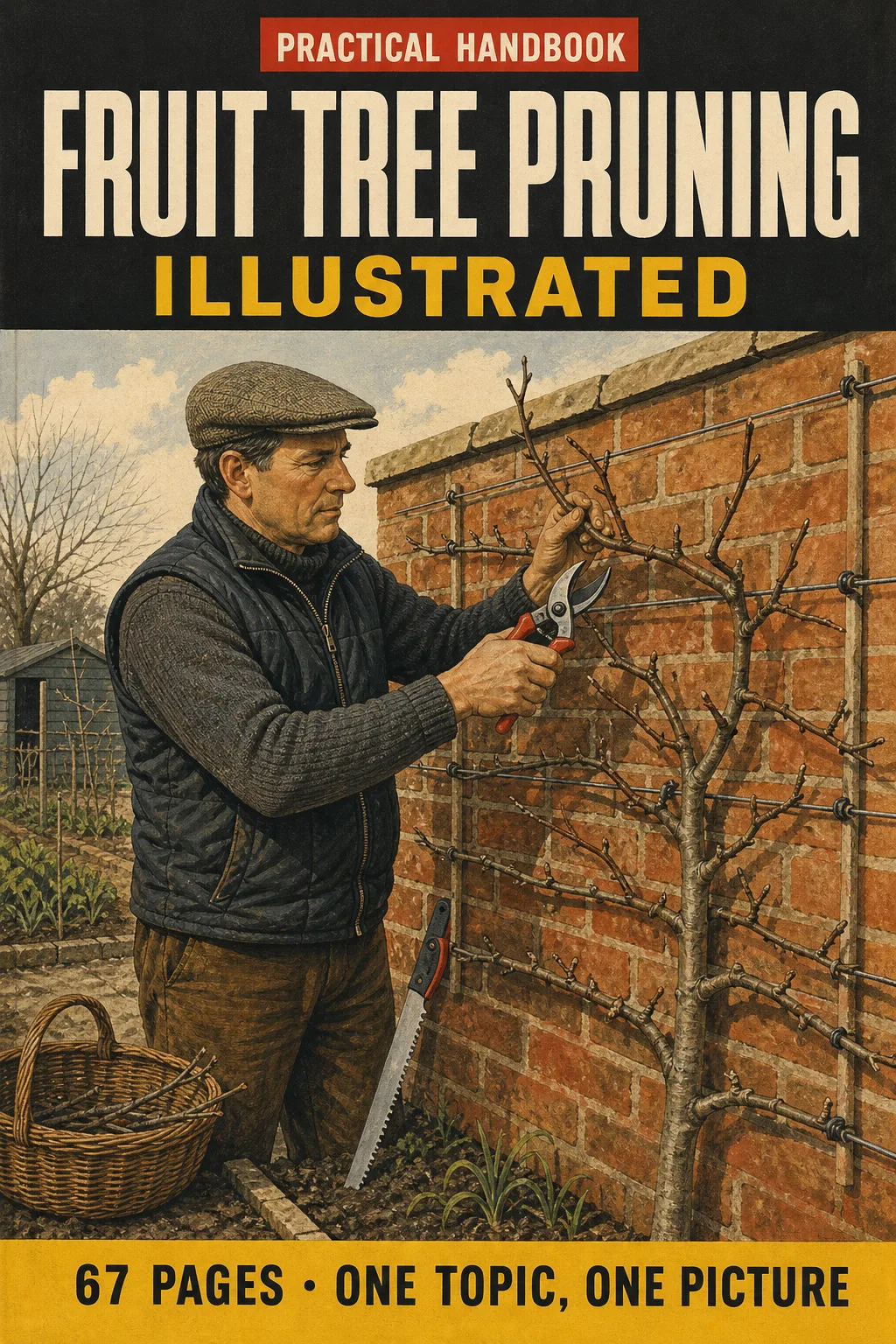
Pruning Apples, Pears, Plums and Cherries, Every Cut Drawn Know Which Tree to Cut, Where and When

Fruit buds and leaf buds, the right cut above a bud, the UK winter window, plums and cherries, summer pruning, cordons and espaliers, and old neglected trees. Each topic has its own page: the drawing first, then what you need to remember. 67 illustrated pages.

START PRUNING THIS WAY

🔒 Secure checkout · PDF by email · 30-day guarantee

Every topic, its own pageEvery cut drawn, with the explanation alongside
67 illustrated pages9 parts, from reading the tree to the before-you-cut checklist
Up-to-date sourcesChecked against current UK fruit-pruning guidance, timed for UK seasons
PDF by emailFormat

Look Inside the Book

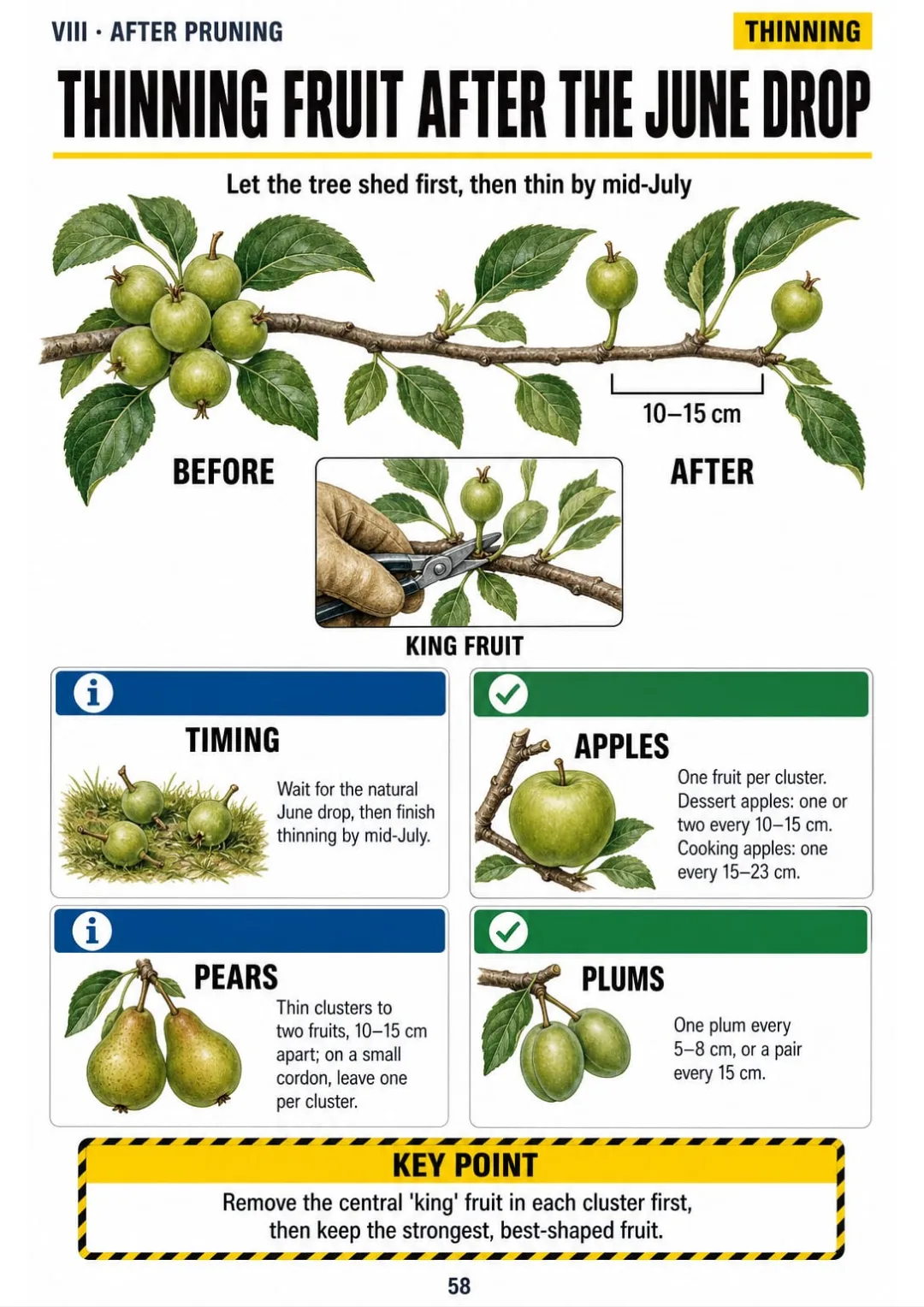
Each page has a large drawing and a box with the sizes, months and steps you need to know:

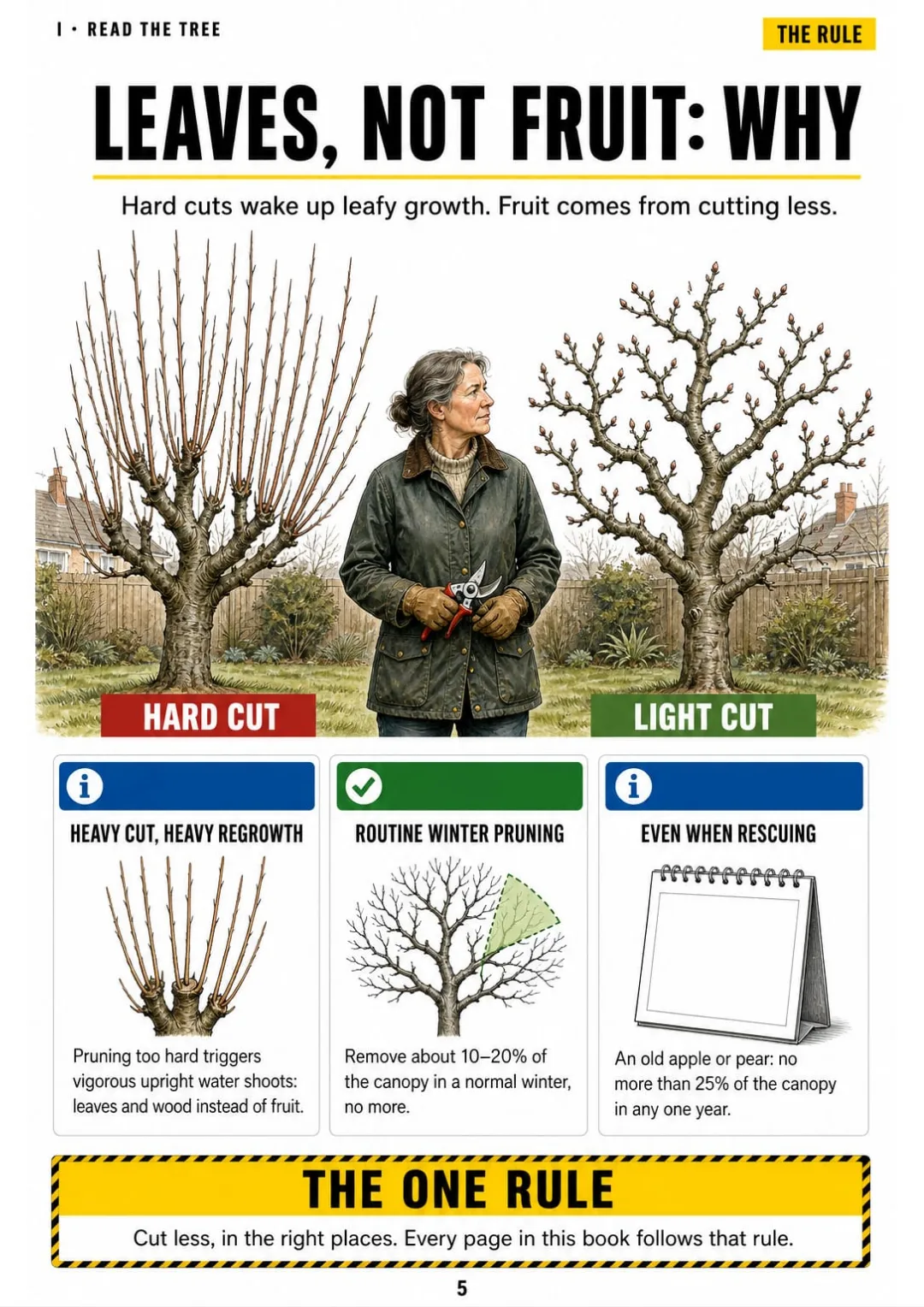
Routine winter pruning removes about 10–20% of the canopy, not more
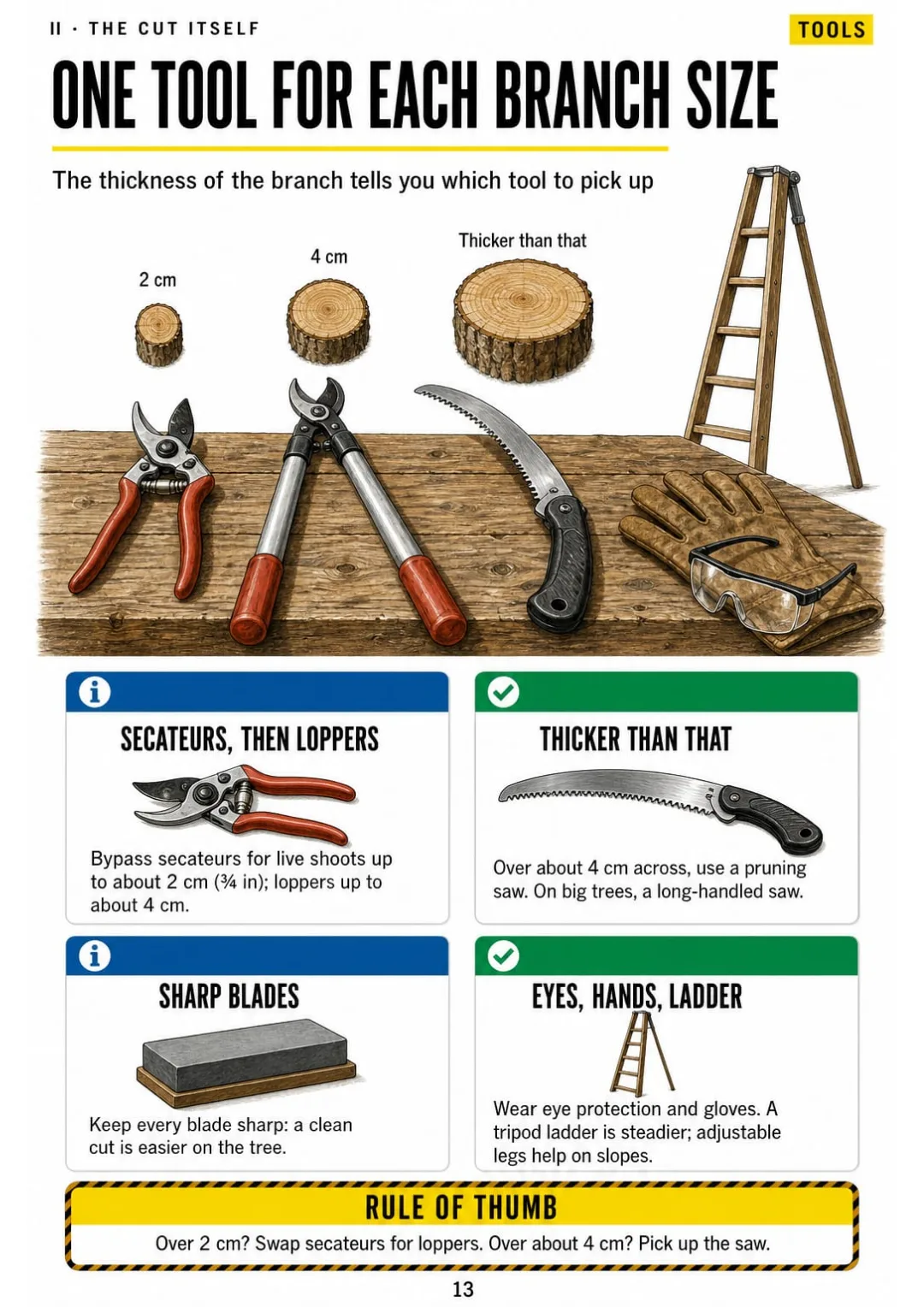
Up to 2 cm: bypass secateurs · up to 4 cm: loppers · thicker: pruning saw · eye protection, gloves, tripod ladder
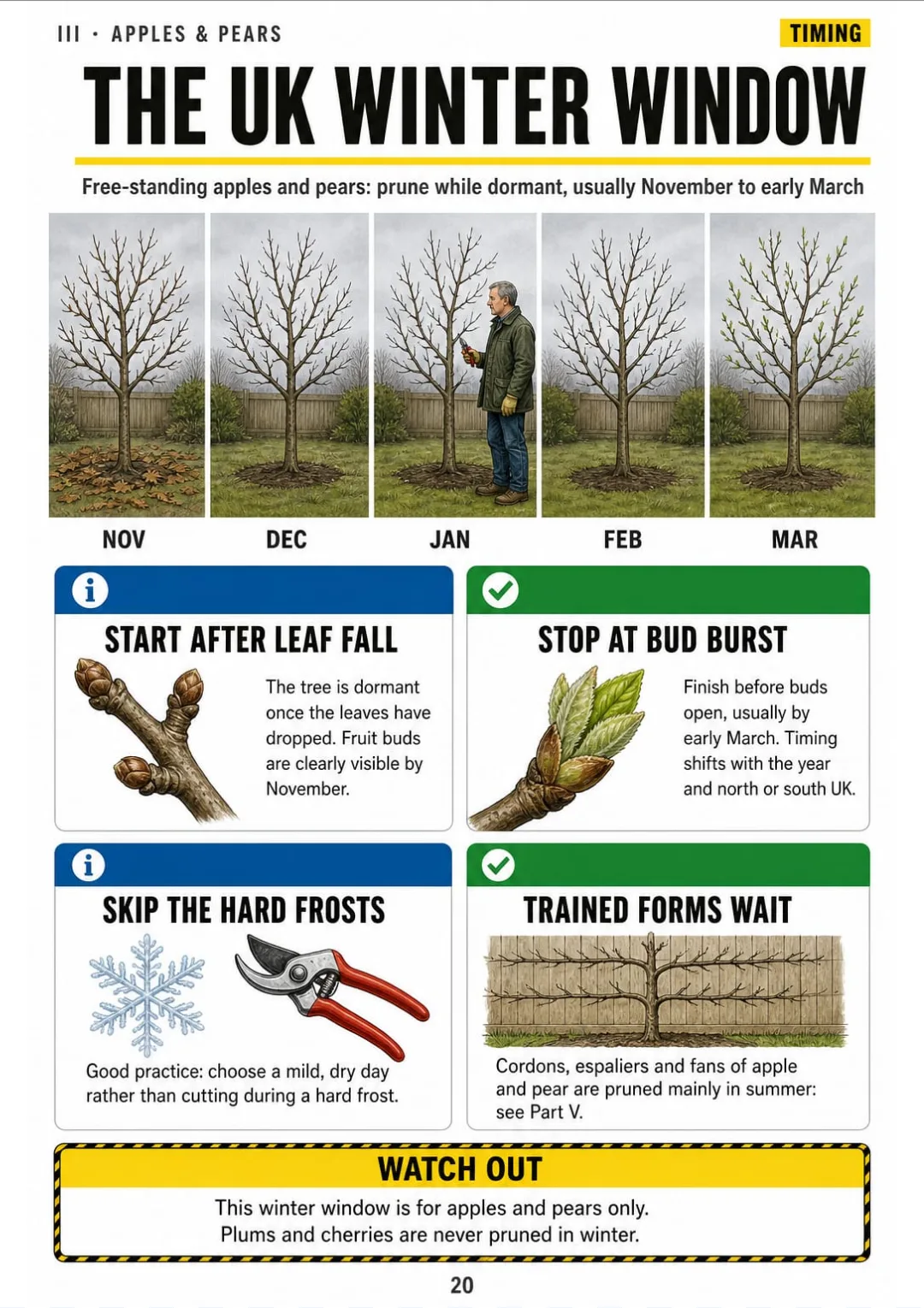
Winter-prune free-standing apples and pears while dormant: usually November to early March.
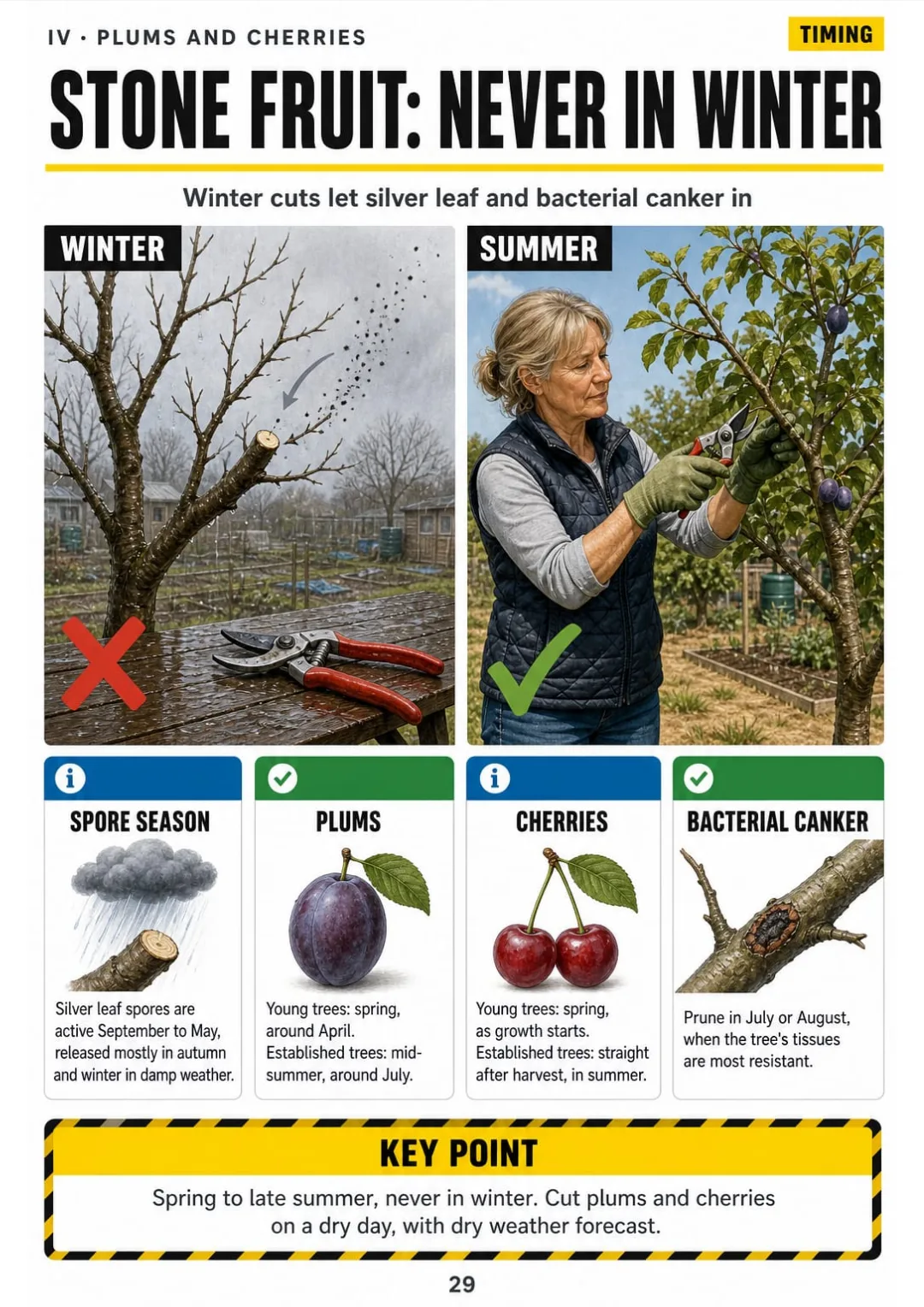
Silver leaf spores fly September to May: prune plums and cherries in spring or summer.
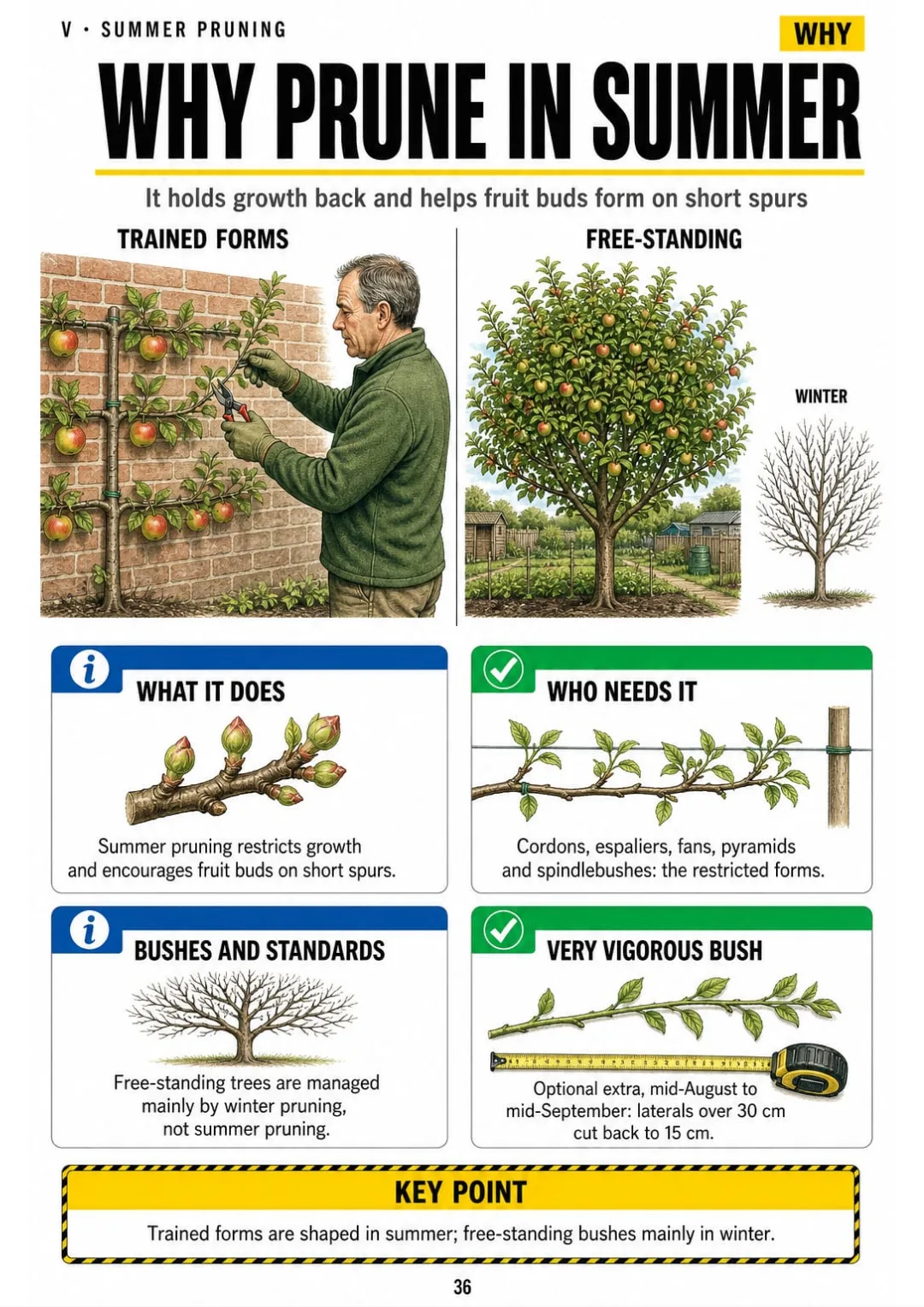
Summer pruning is mainly for cordons, espaliers and fans; bushes are pruned mostly in winter.
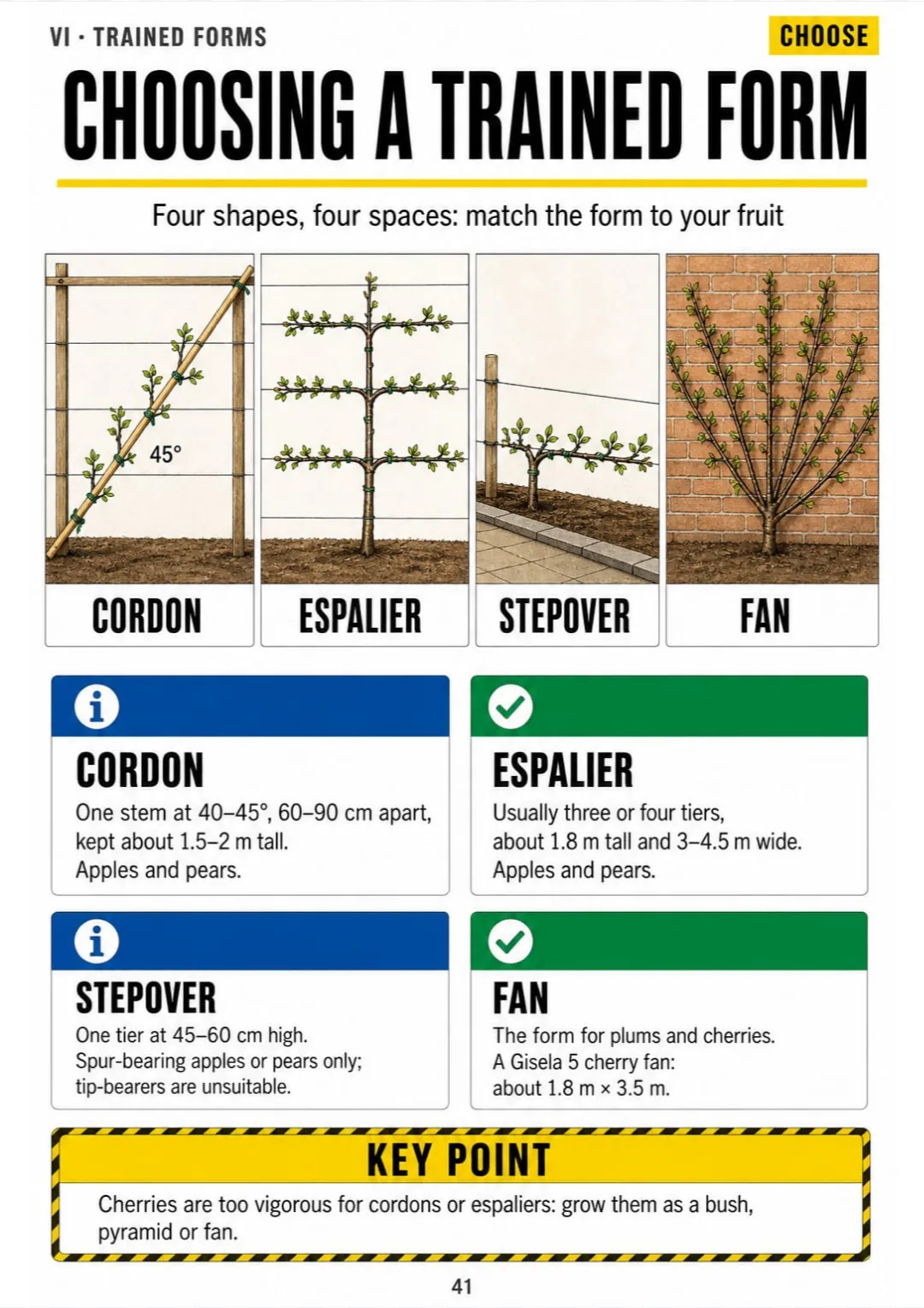
Four trained forms with real sizes: cordon 60–90 cm apart, espalier up to 4.5 m wide, stepover at 45–60 cm.
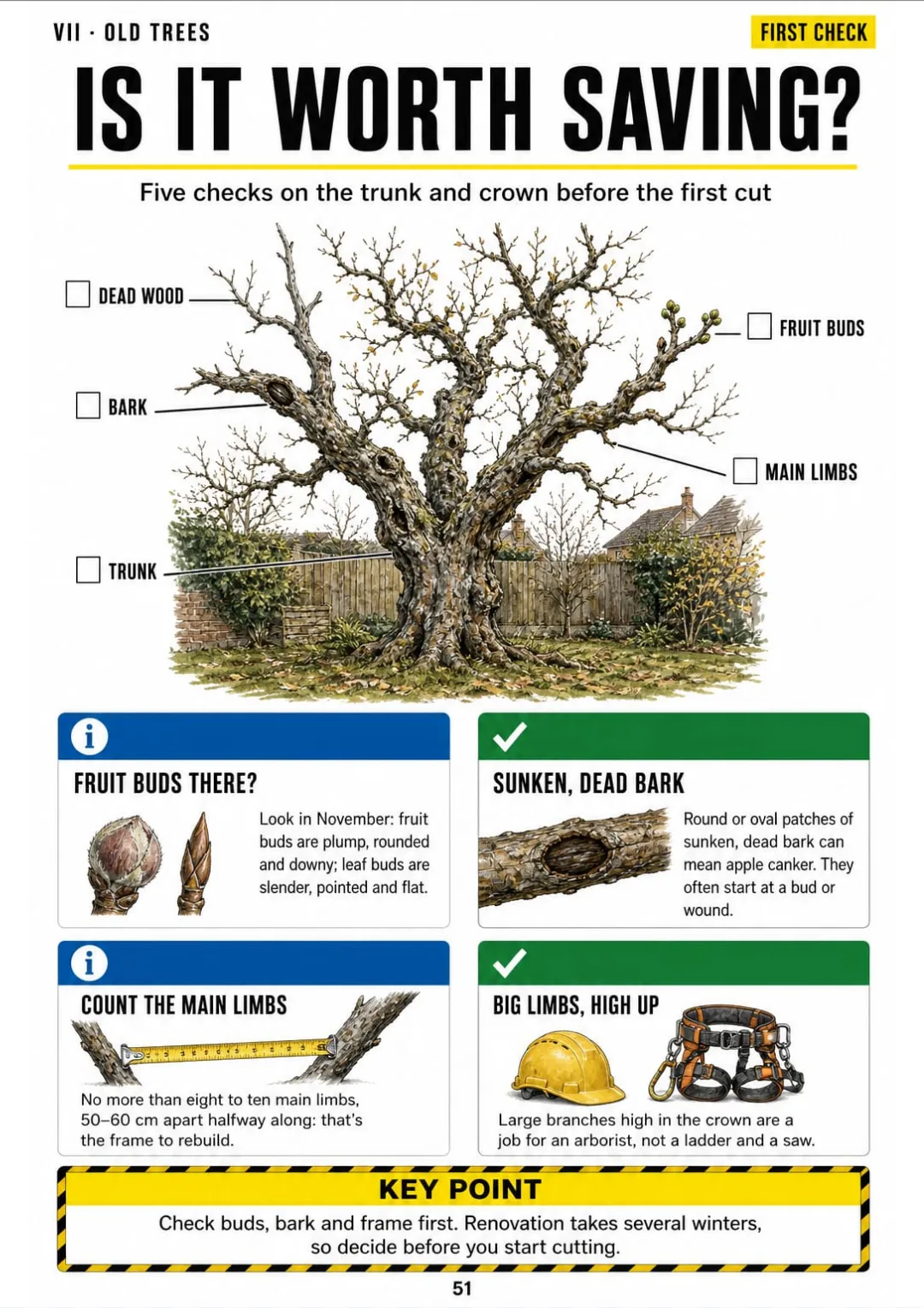
Fruit buds are plump and downy; keep no more than 8–10 main limbs, 50–60 cm apart.
Dessert apples one or two every 10–15 cm, plums every 5–8 cm, done by mid-July.

Swipe to see more →

These are real pages from the book. The table of contents is the full one: 9 parts and 63 topics.

The Problem Isn't You. It's How It Was Explained.

It's a mild Saturday in February. You're standing by the apple tree, secateurs in hand, the plum two metres away, and you can't tell if you're too late for one and too early for the other.

The book on the shelf says 'prune while dormant' somewhere in a long paragraph, then adds the exceptions three pages later. The months are in there, but you can't find them when you need them.

Winter-prune free-standing apples and pears while dormant: usually November to early March.

In this book the UK winter window is one page: a calendar bar from November to early March, with apples and pears inside it and plums and cherries marked off in their own season.

The same goes for fruit buds and leaf buds, the cut above a bud, silver leaf, summer pruning and the cordon at 45°. Each one has its own page.

So you go out, check the page, and you know which tree gets cut today and which one waits, without going back to the book.

COMPARE FOR YOURSELF

The Same Topic, Two Ways to Learn It

THIS
  • The manual: line after line
  • Tools and cuts explained only in words
  • You get to the tree still unsure
The selection of appropriate cutting implements should be determined primarily by the diameter of the wood to be removed. Bypass secateurs, in which a sharpened blade passes a supporting hook, are generally considered suitable for growth not exceeding approximately two centimetres, whereas long-handled loppers provide additional leverage for material of up to approximately four centimetres. Branches exceeding this dimension ought to be removed with a pruning saw. Furthermore, suitable protective equipment, including eye protection and gloves, together with a stable tripod ladder, is recommended.
FOR THIS
  • Each tool drawn next to the branch it cuts
  • The sizes in centimetres in one box
  • You see it and you get it
Up to 2 cm: bypass secateurs · up to 4 cm: loppers · thicker: pruning saw · eye protection, gloves, tripod ladder
CONTENTS

Take a Look at the 9 Parts and 63 Topics

Reading the tree, the cut itself, apples and pears in winter, plums and cherries, summer pruning, cordons, espaliers and fans, rescuing an old tree, crop and care, and a quick review: 67 pages, all illustrated

IRead the tree before you cut · pp. 5-12
  1. Why your tree gives leaves, not fruit
  2. The five-step reading order
  3. Fruit bud or leaf bud?
  4. Wood age: one-year, two-year, older
  5. Spurs: the fruiting knuckles
  6. Spur-bearer or tip-bearer?
  7. Leader, laterals, water shoots, suckers
  8. Your rootstock decides the size
IIThe cut itself · pp. 13-19
  1. Tools for each size of branch
  2. Clean blades between trees
  3. The right cut above a bud
  4. Choosing which way the bud faces
  5. The branch collar: where the saw goes
  6. The three-cut method for big branches
  7. Wound paint: usually not
IIIApples and pears in winter · pp. 20-28
  1. When: the UK winter window
  2. First: dead, diseased, damaged
  3. Open centre or central leader?
  4. Year one: the formative cut
  5. Years two and three: building the frame
  6. Established tree: the leader and the laterals
  7. Renewal pruning on laterals
  8. Thinning crowded spurs
  9. Pears: what's different
IVPlums and cherries · pp. 29-35
  1. Never in winter: silver leaf and canker
  2. Telling silver leaf apart
  3. Plums: prune little, prune light
  4. Plums: shaping a young tree
  5. Sweet cherries
  6. Sour cherries such as Morello
  7. Gumming, and when to worry
VSummer pruning · pp. 36-40
  1. Why prune in summer
  2. When: mid-July to September
  3. The three-leaf rule
  4. The one-leaf rule
  5. Secondary growth in September
VICordons, espaliers and fans · pp. 41-50
  1. Choosing a trained form
  2. Wires and posts
  3. Planting a cordon at 45°
  4. Cordon: the yearly routine
  5. Espalier: forming the first tier
  6. Espalier: adding tiers
  7. Espalier: keeping it tidy
  8. Stepover for the allotment edge
  9. Fan-training a plum or cherry
  10. Fan: maintaining the ribs
VIIBringing back an old, neglected tree · pp. 51-57
  1. Is it worth saving?
  2. The quarter rule
  3. Year one: dead wood and the big crossers
  4. Year two: opening the centre
  5. Year three: spurs and shape
  6. Dealing with water shoots
  7. Old plums and cherries: a gentler rescue
VIIIAfter pruning: crop and care · pp. 58-61
  1. Thinning fruit after the June drop
  2. Biennial bearing: a heavy year, then nothing
  3. Tidy up after you cut
  4. Worked example: one apple tree, before and after
IXQuick review and frequent mistakes · pp. 62-67
  1. The pruning calendar on one page
  2. Frequent mistakes 1: cutting every tip
  3. Frequent mistakes 2: winter cuts on stone fruit
  4. Frequent mistakes 3: snags and flush cuts
  5. Frequent mistakes 4: too much in one go
  6. Before-you-cut checklist

One Page, One Topic, All Clear

Think of it this way:

It's late November. The leaves are down, the tree is bare, and you've got one free afternoon to prune before the weather turns.

You open the page on fruit buds and leaf buds and see them drawn side by side: the plump, downy fruit bud next to the slim leaf bud, with an arrow showing where the secateurs go.

Summer pruning is mainly for cordons, espaliers and fans; bushes are pruned mostly in winter.

Then the same with the three-cut method for big branches, silver leaf on plums, the three-leaf rule, the first espalier tier and the quarter rule for old trees: each one on its own page.

Fruit Tree Pruning Illustrated is 9 parts and 63 topics, all drawn, ending with the pruning calendar on one page, the frequent mistakes and a before-you-cut checklist.

What you see drawn, you don't have to memorize.

What's Inside Fruit Tree Pruning Illustrated:

Ipp. 5-12

Read the tree before you cut

Why a tree gives leaves and no fruit, the five-step reading order, fruit buds and leaf buds, wood age, spurs, spur-bearers and tip-bearers, leaders and laterals, and rootstocks.

IIpp. 13-19

The cut itself

The right tool for each branch size, cleaning blades between trees, the cut above a bud, which way the bud faces, the branch collar, the three-cut method and why wound paint is usually not needed.

IIIpp. 20-28

Apples and pears in winter

The UK winter window, dead, diseased and damaged wood first, open centre or central leader, the first three years, the established tree, renewal pruning, thinning spurs and what's different with pears.

IVpp. 29-35

Plums and cherries

Why stone fruit isn't pruned in winter, telling silver leaf apart, light pruning on plums, shaping a young plum, sweet cherries, sour cherries such as Morello, and gumming.

Vpp. 36-40

Summer pruning

Why and when to prune in summer, the three-leaf rule, the one-leaf rule and secondary growth in September.

VIpp. 41-50

Cordons, espaliers and fans

Choosing a trained form, wires and posts, the cordon at 45°, building and keeping espalier tiers, the stepover for the allotment edge, and fan-training a plum or cherry.

VIIpp. 51-57

Bringing back an old, neglected tree

Whether an old tree is worth saving, the quarter rule, a three-year plan cut by cut, water shoots, and a gentler rescue for old plums and cherries.

VIIIpp. 58-61

After pruning: crop and care

Thinning fruit after the June drop, biennial bearing, tidying up after you cut, and one apple tree followed from before to after.

IXpp. 62-67

Quick review and frequent mistakes

The pruning calendar on one page, four pages of frequent mistakes and a before-you-cut checklist.

At the end of the book: The pruning calendar on one page, four pages of frequent mistakes, a before-you-cut checklist and one tree followed from before to after.
Plus: 2 Free Books

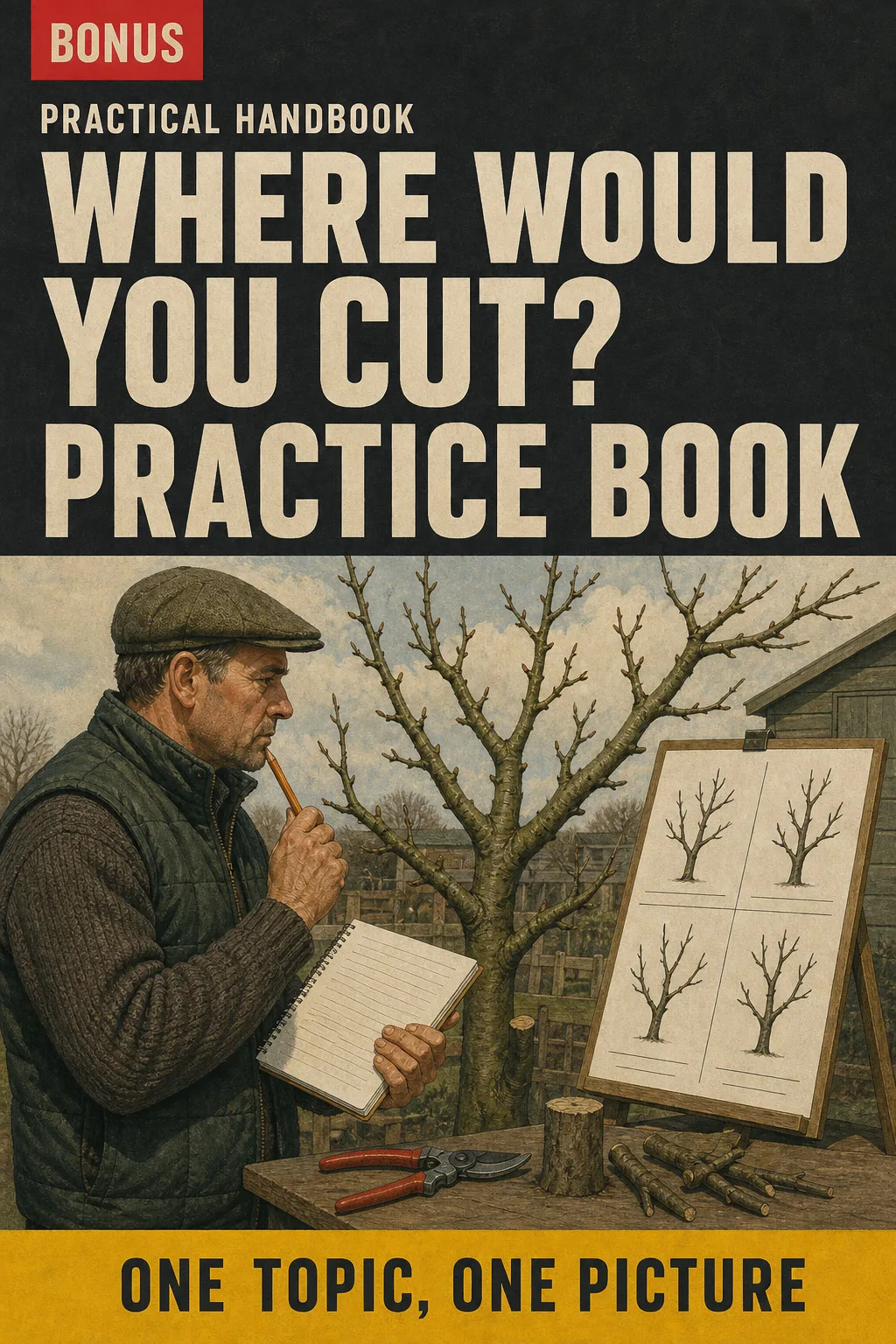
Where Would You Cut? Practice Book

BONUS 1: «Where Would You Cut? Practice Book»

Value on its own: US$ 17.90

Drawn branches where you mark your own cuts, with the answer on the next page, so you've practised before you go near the tree.

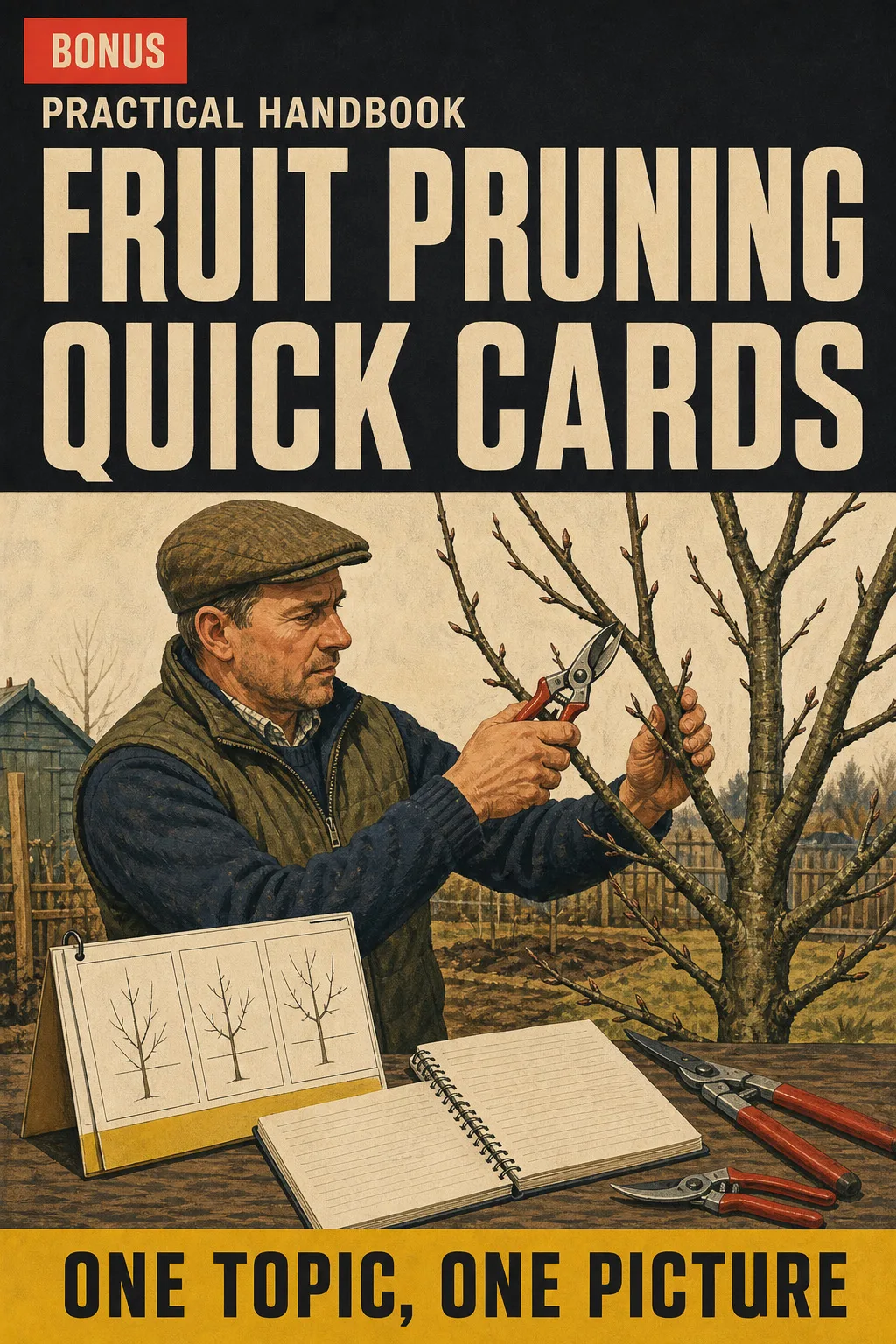
Fruit Pruning Quick Cards

BONUS 2: «Fruit Pruning Quick Cards»

Value on its own: US$ 14.90

One card per tree and trained form, covering when to prune, what to cut and what to leave. Print them and keep them in the shed.

Fruit Tree Pruning Illustrated with 2 Free Books

  • Fruit Tree Pruning Illustrated: 67 illustrated pagesUS$ 63
  • BONUS 1: Where Would You Cut? Practice BookUS$ 17.90
  • BONUS 2: Fruit Pruning Quick CardsUS$ 14.90
  • High-resolution PDF to printIncluded
Total value US$ 95.80
YOUR PRICE:
US$ 27
You save US$ 68.80
YES, I WANT FRUIT TREE PRUNING ILLUSTRATED FOR US$ 27

📄 This is a digital PDF book sent to your email: nothing is printed or shipped.

Secure purchaseEncrypted payment30-day guarantee

PDF by email: We email you Fruit Tree Pruning Illustrated as a PDF, together with the two free books. It's a single payment: no installments, no extra charges.

Who This Book Is For

Your first fruit tree

Your first fruit tree

You've planted a young apple or pear, or just moved in with one. You see how to read it and make the formative cuts in the right order from year one.

Winter pruning is coming up

Winter pruning is coming up

November to early March is your window. You open the page, check which tree is cut now and which waits, and go out with a plan.

You already prune every year

You already prune every year

You've pruned by eye for years. Now you can see why there were leaves and no fruit, and you can take on a cordon, an espalier or an old tree.

Everything You Get Today

US$ 95.80US$ 27
YES, I WANT FRUIT TREE PRUNING ILLUSTRATED FOR US$ 27

📄 This is a digital PDF book sent to your email: nothing is printed or shipped.

30DAYS
GUARANTEE

30-Day Guarantee

Try Fruit Tree Pruning Illustrated for 30 days, bonus books included.

We refund everything if the file won't open, if the book isn't what you see here, if you were charged twice or if the email doesn't arrive. Just email us.

You pay once. No subscriptions.

Frequently Asked Questions

Is it for me if I've got an old, neglected tree rather than a young one?

Yes. Part VII covers bringing an old tree back over three years, cut by cut. The rest of the book covers young and established trees, plus cordons, espaliers and fans.

Is it written for UK seasons, or is it an American book?

It's written for the UK: months for UK winters and summers, sizes in centimetres and metres. The content follows current UK fruit-pruning guidance, including the advice published by the Royal Horticultural Society, used as a reference.

Is it official material?

No. It's an independent illustrated book. It has no connection to the RHS or any other organisation, and none of them endorse it.

Does it replace a pruning course?

No. It's a reference to read and keep to hand. For very large trees or work at height, it doesn't replace hands-on training or a qualified arborist.

I've watched plenty of free videos. What's different here?

Each video shows one tree and one opinion. Here every topic is one drawn page, always in the same order: read the tree, choose the cut, check the month. Apples, pears, plums and cherries in one place, ready to print and take to the tree. The practice branches in the Where Would You Cut? Practice Book were drawn for this book, with the answers on the next page.

When and how does it arrive?

As a PDF by email, to the address you enter at checkout, together with the 2 free books.

Do I have to pay every month?

No. It's a one-off payment, with no subscription.

Can I have it on paper?

Yes. The PDF is ready to print at home or at a print shop. The Quick Cards are designed to be printed and kept in the shed.

How does the refund work?

You have 30 days. We refund everything if the file won't open, if the book isn't what you see on this page, if you were charged twice or if the email doesn't arrive: just email us.

Before You Close This Page

No more rereading pruning notes that never stick.

The fruit bud and the leaf bud: you see them drawn, and that's it.

You go out to the tree knowing where every answer is.

Drawings make studying faster.

The book is right below.

One-time payment: US$ 27 · Guarantee: 30 days · PDF by email

YES, I WANT FRUIT TREE PRUNING ILLUSTRATED FOR US$ 27

📄 This is a digital PDF book sent to your email: nothing is printed or shipped.